

Inversion Tables for Back Pain Relief
Low back pain is one of the most common conditions affecting adults today. Whether it’s caused by long hours of sitting, poor posture, past injuries, or age-related changes in the spine, back pain can limit movement and affect everyday life. One treatment approach many people are curious about is spinal decompression, especially through the use of an inversion table.
A Brief Look at Manual Traction
Manual traction is a manual spinal decompression method, which is used by the licensed physical therapists to apply a slight force in an attempt to decrease the pressure on the spinal joints, discs, and nerves. As the force and positioning are adjustable in real time, it particularly works well on degenerative spine syndromes and nerve-related pain. Although this treatment is performed in the clinic, inversion tables provide an equivalent effect of decompression, which could be utilized at home.
What Is an Inversion Table?
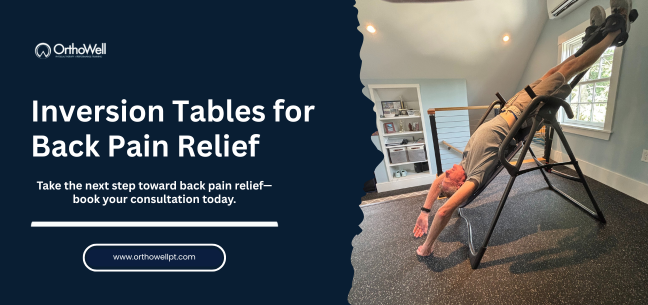
An inversion table is a device that allows you to hang partially or fully upside down while being securely supported by your ankles. By using gravity, inversion tables gently stretch the spine, creating space between vertebrae and reducing compression on discs and nerves.
Many people use inversion tables to manage:
- Low back pain
- Spinal stiffness
- Muscle tension
- Pressure caused by disc degeneration or spinal narrowing
Even short periods of inversion, often just a few minutes can provide temporary symptom relief for some individuals.
How Inversion Tables May Help Back Pain
When the spine is compressed, irritated nerves can cause pain, stiffness, or discomfort that may radiate into the hips or legs. Inversion therapy works by:
- Reducing spinal compression
- Improving spinal alignment
- Relaxing tight muscles
- Increasing circulation to spinal tissues
For many people, this leads to decreased pain and improved mobility, especially when used consistently and safely.
Important Safety Considerations
Inversion tables are not appropriate for everyone. People with high blood pressure, heart conditions, glaucoma, or balance issues should avoid inversion therapy unless cleared by a healthcare professional. It’s also important to start slowly using partial inversion rather than fully flipping upside down and limit sessions to short durations.
Combining Inversion Therapy with Professional Care
Although inversion tables can be effective in managing symptoms at home, they require the inclusion of a plan of treatment. Exercises can be strengthened, mobility exercises and posture can be corrected, professional guidance, etc. will assist in solving the problem (not providing temporary relief) of the cause of back pain.
At our Beverly and Newburyport clinics, we often educate patients on safe at-home strategies like inversion therapy while also providing hands-on care to support long-term spinal health.
When you are suffering with back pain that is happening continuously, you may be wondering whether an inversion table can serve you. A professional examination may help you conclude how safe and effective it might be for your body.