

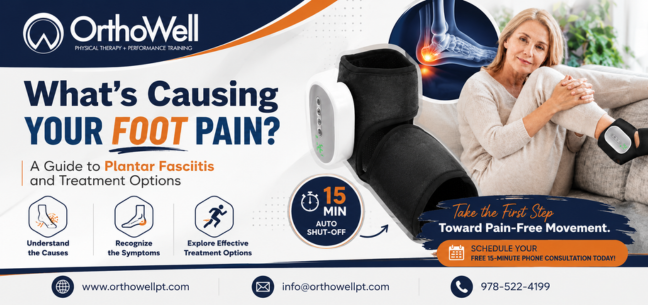
What’s Causing Your Foot Pain? A Guide to Plantar Fasciitis and Treatment Options
If you’ve ever rolled out of bed and felt a stabbing pain shoot through your heel the moment your foot hits the floor, you’re not alone. This is one of the most common complaints we hear, and more often than not, it points to a condition called plantar fasciitis.
As a clinical team that works with patients dealing with foot and ankle pain every week, we’ve seen how disruptive this condition can be and how manageable it becomes once you understand what’s actually happening and what to do about it.
What Is Plantar Fasciitis?
The plantar fascia is a thick, fibrous band of tissue that runs along the bottom of your foot, connecting your heel bone to your toes. It acts like a shock absorber and supports your arch every time you stand, walk, or run. When this tissue gets overworked or strained beyond its limits, tiny tears develop, leading to inflammation and that familiar deep, aching, or stabbing pain near your heel.
The good news is that the vast majority of cases improve with conservative care. Surgery is rarely needed, and most people see real progress within a few months of consistent treatment.
Common Causes Behind the Pain
Plantar fasciitis doesn’t usually appear out of nowhere. It builds up over time due to a combination of factors:
Foot mechanics. Extra stress is placed on the fascia with each step for those with flat feet or unusually high arches or those who walk with an irregular gait.
Footwear choices. The foot’s arch-support fascia has to overwork when you wear shoes that don’t have enough support, are worn out, or have no arch support.
Sudden increases in activity. Runners who ramp up mileage too quickly, or anyone who starts a new job that involves long hours on hard floors, are especially vulnerable.
Extra weight. Carrying additional body weight increases the load on your feet with every single step, which adds up fast over the course of a day.
In our experience, it’s rarely just one factor; it’s usually a mix of worn-out shoes, weak supporting muscles, and a foot shape that needs a little extra help.
How Do You Know It’s Plantar Fasciitis?
The symptoms tend to follow a fairly recognizable pattern:
- A sharp, stabbing pain in the bottom of your heel, especially with your very first steps in the morning or after sitting for a while
- Pain that eases up once you’ve been walking for a few minutes, but returns after standing for long periods
- Soreness that flares up after exercise rather than during it
- Tenderness when pressing on the bottom of the heel or along the arch
If this sounds familiar, it’s worth getting evaluated rather than just pushing through it, since untreated plantar fasciitis can linger for months and sometimes lead to compensating injuries in the knee, hip, or back.
Treatment Options That Actually Work
The reassuring part is that plantar fasciitis responds well to a layered approach. Here’s what tends to make the biggest difference:
Rest and Heat. In the early stages, reducing high-impact activities and using heat in combination with toe squeezes a few times throughout the day for 10 minutes will help to reduce inflammation and encourage healing..
Stretching and strengthening. Gentle daily stretches for the calf, Achilles tendon, and the plantar fascia itself can loosen tight tissue and reduce morning pain significantly. A physical therapist can guide you through exercises tailored to your specific foot mechanics.
Foot orthotics. This is one of the most effective long-term solutions we recommend. Custom or well-fitted foot orthotics redistribute pressure across the foot, support the arch properly, and reduce the strain on the plantar fascia with every step. If you want to learn more about how this works, our detailed guide on foot orthotics for plantar fasciitis breaks down the different types available and how to know which one fits your foot type. Many of our patients have also had good results with at-home recovery tools like the TeraPod, which can be a helpful addition to a daily stretching and recovery routine alongside proper orthotic support.
Anti-inflammatory medication. Anti-inflammatory medicines (NSAIDs) reduce swelling, pain, and fever by blocking enzymes that produce inflammation-causing chemicals in your body. Common over-the-counter options include ibuprofen (Advil or Motrin) and naproxen (Aleve). They are highly effective for injuries and arthritis, but can cause stomach upset.
Footwear changes. Cushioned shoes with good arch support and a slightly raised heel can make a noticeable difference, especially if you’re currently wearing flat or unsupportive shoes.
When to Seek Professional Help
If your heel pain has lasted more than a few weeks despite rest, heating, and stretching, it’s time to get a proper evaluation. A physical therapist can assess your gait, identify the underlying mechanical issues, and put together a recovery plan that’s actually built around your foot, not a generic checklist.
At OrthoWell Physical Therapy, our team specializes in diagnosing the root cause of heel and arch pain and creating individualized treatment plans, including guided stretching programs, gait analysis, and custom foot orthotics recommendations. If your foot pain has been holding you back, schedule a free consultation with OrthoWell Physical Therapy today and take the first step toward walking pain-free again.