First of all, you need to understand the difference between aerobic and anaerobic exercise. Aerobic exercise requires oxygen, is low powered and lasts for greater than 15-20 minutes. Anaerobic exercise, like Cross Fit, does not require oxygen, is high powered and each exercise lasts less than 2 minutes.
The Positives: Recent studies have shown that anaerobic exercise is a vastly superior protocol for fat burning than it’s less intense aerobic counterpart. There is evidence that shows that anaerobic exercise is evenly matched to aerobic exercise with regard to cardiovascular benefits. Check out the evidence in an article in the Journal of Strength and Conditioning. More evidencethat comparable calorie burning effects can be achieved in half the time with anaerobic exercise.
The Negatives: Potential for INJURY! The article in the Journal of Strength and Conditioning also states that 16% of the participants dropped out due to “injury or overuse”. In addition, in 2011, the U.S. military, in conjunction with the American College of Sorts Medicine, advised soldiers to avoid CrossFit, citing “disproportionate musculo-skeletal injury risk.” You can read it HERE. In 2009, the US Military was encouraging training programs such as CrossFit. You can read it HERE. So what happened?
CrossFit goes out of its way to warn people that if they can’t maintain proper technique, they should back off. After all, the CrossFit mantra is “Mechanics, Consistency, Intensity”. Backing off , however, is a hard sell for many participants because workouts are viewed as a competition. The 2009 US Military study states that “Properly trained coaches are fundamentally important in both establishing an effective training program and developing proper movement mechanics in athletes.” It sounds like something, or someone, went wrong between 2009 and 2011.
So I guess the biggest question that you should ask (before joining a local Cross Fit gym) is WHO is running the classes and HOW they are trained. Make sure they at least have Level I or Level II Cross Fit training. A power lifting background is very helpful as power lifters are obsessive about proper form. Make sure you observe a class or two to witness how or if the instructor is scrutinizing and ensuring proper form. The proof is in the puddin’.
Throwing a baseball is the fastest known human movement. The speed of the throw from a professional baseball pitcher can be upwards of 7000 degrees per second. Now that’s fast! In addition to that, the shoulder is the most mobile joint in the human body. So what does this mean?
For those of you that “feel a need for speed”, you need to beware of the risks. In anarticle from the Journal of Sports Medicine, twenty-three professional pitchers were followed over three seasons. Those pitchers who were throwing at the highest maximum velocity suffered the highest incidence of elbow injuries. So how does that effect you? It is vitally important for the throwing athlete to understand the stresses that repetitive throwing places on young as well as mature joints. In the words of baseball trainer phenom Eric Cressey, “injuries occur when you ignore the things that need to be addressed, plain and simple.” In one of my previous blog posts, I talk about how it has been scientifically proven that strength training enhances athletic performance. Shoulders and elbows become problematic not only because of muscular weakness, but also from poor flexibility, poor tissue quality ie scar tissue and, of course, faulty mechanics. For example, consider the dreaded inverted or upside down “W” exhibited by the Yankees’ Joba Chamberlain or the National’s Stephen Strasburg.
Just because a joint is flexible does NOT mean that it is stable. Consider the six phases of throwing and all the potential areas of instability when throwing at maximum velocity. Our objective should be to achieve dynamic stability during ALL phases. Yes, if you are stiff we are going to stretch you and if you are loose we are going to stabilize you…but what about the gray areas? Every major league pitcher suffers from a loss of shoulder internal rotation for at least 3 days after an outing. This is a situation when you do NOT stretch. The resulting loss of motion is due to the micro-trauma of eccentric load during deceleration and needs time to heal. It has been shown that the posterior aspect (the back part) of the shoulder joint capsule actually thins out after repetitive throwing. So let me ask you, should we ever stretch the posterior aspect of the shoulder joint? Or should treatment focus more on the scar tissue that results in the decelerators?
So what are the most common upper extremity baseball throwing injuries? These injuries include the problems associated with overuse or improper training such as: • Impingement syndrome • Rotator cuff tendonitis • Biceps tendonitis • Medial elbow pain from flexor-pronator tendonitis
These overuse injuries can lead to more serious conditions such as: • Rotator cuff tears • Labral tears • Ulnar collateral ligament (UCL) tears
We have many manual tests that we can perform in the clinic to differentiate and determine what structures may be involved in YOUR specific case. In the case of impingement syndrome, I have previously posted a BLOG articleon the different types of impingement syndrome as well as a VIDEO demonstrating the tests that we use to differentiate rotator cuff versus labral dysfunction. It should be noted that a condition called scapular dyskinesis can lead to impingement syndrome. This condition is characterized by an imbalance of scapular motion relative to shoulder motion. It is the result of weakness in the muscles that stabilize the scapula during the throwing motion. I have also listed some of the best, evidence-based exercises in a previous postfor specific shoulder and scapular retraining.
It is very important for your therapist to differentiate between what we call active restraint or passive restraint structures. Active restraint structures are those things that contract and relax like your muscles and tendons. Passive restraint structures are things like ligaments ie UCL, cartilage ie labrum and meniscus, and discs ie intervertebral discs. I would like to highlight the UCL of the elbow as one example of this. For many pitchers, the first sign of impending trouble with the UCL is pain or stiffness in the flexors of the forearm. The flexors and pronators of the forearm are the active restraints and the UCL is the primary passive restraint to the extreme valgus forces that occur at the elbow during terminal cocking phase and early acceleration. Did you know that when the UCL is tested in isolation during cadaver studies that it only takes 32 newton/meters of force to rupture it? Guess how much valgus stress is on the inside part of the elbow during terminal cocking phase….64 newton/meters!! It has been shown that the UCL takes on 35 newton/meters of that force. Yikes!! So why doesn’t it rupture? It doesn’t rupture because the rest of that stress is controlled by the active restraints…your muscles in the forearm. You can probably guess what happens when you ignore your forearm muscles?
As mentioned earlier, imbalances in flexibility, tissue quality, biomechanics, or weakness can lead to stress on both active and passive restraints during the throwing motion. Invariably, the process of repetitive throwing leads to the development of scar tissue. There is a constant state of break-down and build-up that occurs during sport specific activity. I have blogged on problems with scar tissue and the debate on whether pain arises from tendonitis or not. I have also explained the benefits of the Graston Technique as a way to ensure that scar tissue does NOT inhibit your ability to throw.
Now, what blog post is complete without a little twist. After listing the most common injuries that we see in the throwing athlete, I would like to share a list of conditions that have been confirmed via MRI in athletes that have NO pain:
* 79% of overhead throwing athletes have labral tears * 34% of athletes have rotator cuff tears * 82% of athletes have disc herniations
Does this mean that you may ALREADY have a tear and that you are currently asymptomatic like the athletes in the previous studies? Yes, you may. Does this mean that your future hall of fame career is over? No, it doesn’t. Some practitioners are of the opinion that you may very well need a labral lesion to throw hard in the first place. The biggest challenge with this is ensuring that the throwing athlete develops all the things that we have talked about in this post:
It is ALL these reasons that make it vitally important to be as educated as you can about your shoulder mechanics and to be aware of the important role that training and physical therapy play in keeping you healthy. It is our role as your physical therapist and performance specialist to guide you with you in this process. Here is an example of an effective warm up program for baseball players by the former trainer for the Boston Red Sox, Mike Reinold,PT. CLICK HERE.
Understanding throwing biomechanics in combination with a thorough knowledge of the anatomy and function of the shoulder and elbow is imperative to properly diagnose and treat the throwing athlete. Your prognosis for a healthy return to competition after arthroscopic surgery or ligament reconstruction has dramatically improved especially when you are in the right hands during recovery. My job as a physical therapist is not only to effectively rehabilitate your body after surgery but, more importantly, to help PREVENT the need for surgery in the first place. Of course, this is a two way street. I can only be your coach if you are a willing and motivated player.
I have treated a lot of foot pain over 22 years as a physical therapist. Because I make custom foot orthotics, I am exposed to foot ailments much more than other PT’s. Geoff and I treat a lot of these problems in the clinic every day. One of my patients even went so far as to nickname us the “foot whisperers” and another patient coined OrthoWell as the “doctors of knotology”. Can you feel the love? I have spent a lot of time researching the BEST strategies to treat foot pain. This has culminated in the release of my Ebook entitled “Physical Therapist Discovers the Truth about Plantar Fasciitis“ as well as my self-help DVD on the treatment of Foot Pain & Plantar Fasciitis. Both of these are now available and are on my HOMEPAGE.
The Ebook includes a complete review of the literature on the treatment of plantar fasciitis as well as a description of the the most effective treatment strategies. This book is not a re-tellling of on-line information about plantar fasciitis. It is the missing link! You can read more by clicking HERE.
The DVD is a collection of videos that will “take you by the hand” and teach you specific methods and exercises to resolve your foot pain. It is designed for those people suffering from foot pain who cannot come to see us or who have not responded to other practitioners. It is a great way for our SUCCESS STORY patients to help friends and family members who have foot pain but cannot come to see us directly. You can read more HERE. Watch the intro video below. Talk to you soon!!
What do you think of when you visualize someone who is really stressed out? It sure seems like some people are wound tightly these days. I have had my own issues with stress. I’m sure you have too. I find myself talking more and more with my patients about the effects of stress and how beneficial diaphragmatic breathing and proper nutrition can be. We will discuss nutrition in an upcoming post. You also need to be aware of other possible manifestations of stress like increased muscle tone, rapid heart rate, palpitations, increased blood pressure, GI distress, mood swings, loss of appetite, and sleep disturbances to name just a few. These symptoms make living a happy, relaxed and “normal” life much more difficult.
So what about the relationship between stress and breathing? Breathing occurs at a very primal level. If you don’t breathe, you don’t live! Your body will do whatever it takes to draw air into the lungs. Instead of using the diaphragm, it may recruit other accessory muscles in your neck or low back. This pattern reinforces poor posture and causes impaired flexibility which can promote shallow, ineffective breathing. It prevents the ability to exhale fully and to perform a proper, full diaphragmatic breath. Lets review what that means.
First of all, when performing a diaphragmatic breath, your belly should expand outward. This is due to the downward movement of your diaphragm as you inhale. Secondly, your lower ribcage should expand. Thirdly, your upper ribcage will expand during a maximal inhalation. Your ribcage should expand as a unit. It should NOT elevate. Movement of your ribcage upward, shoulder shrugging, or contraction of your neck muscles are all signs of faulty breathing patterns. Remember that slouched sitting and forward head posture encourages shallow breathing and prevents full, complete expansion of your ribcage. We discussed breathing pattern disorders in relation to CORE activation during my last post and video demonstration. Here it is in case you missed it:
So what does the research say about the link between pain and breathing disorders? A very interesting phenomenon is the prevalence of pain syndromes that are NOT caused by a specific organic illness. Katon & Walker (1998) noted that patients with the most common physical symptoms (i.e. abdominal pain, chest pain, headache, back pain), are responsible for half of all primary care visits in the USA, and yet only 10%–15% of these are found to be caused by organic illness! All these symptoms are well recognized as capable of being the result of breathing pattern disorders.
Perri and Holford (2004) evaluated 111 patients attending a chiropractic pain clinic and found 56.4% demonstrated faulty breathing on relaxed inhalation, increasing to 75% when taking a deep breath. 87% reported a history of various musculoskeletal pain problems. Based on this population, they observe that: “Chances are 3 in 4 that new patients seen today will have faulty breathing patterns.”
So what does the research say about the effects of breathing exercises on stress? Remember, stress reactions are controlled by our autonomic nervous system i.e. sympathetic and parasympathetic. Fight or flight? In Pal and colleagues, breathing exercises were shown to enhance the parasympathetic (inhibitory or calming) effects and decrease the sympathetic (excitatory) effects of muscles and nerves. They improve respiratory and cardiovascular function and improve both physical and mental health. Convinced yet?
So how do you begin breathing exercises?The first step is understanding that the relaxation response has to be relearned. You need to learn how to identify and turn off the stress response. As stated by Kabat-Zinn, “you need to learn how to replace negative thoughts and physical tension with regular practice of ‘calm stillness of mind and body’ “. Buddha is in the house! The next step is to schedule regular daily practice. You need to invest 10-15 minutes at least one time every day. According to Leon Chaitow, we need to “restore an energy-efficient, low chest, nose-breathing pattern with a relaxed pause at the end of exhalation”. He calls it “low slow nose breathing”. Initially, lay comfortably supported by pillows in a quiet room. Progress to sitting once a positive outcome is achieved in lying. You need to reinforce proper posture at home, work, and car and realize that breathing and relaxation techniques only help eliminate the symptoms, not the causes of stress. Be honest about making realistic lifestyle changes. The video below demonstrates a method that uses both breathing and physical relaxation techniques.
Remember that breathing drives everything that happens, both good and bad, throughout our entire bodies. So breathe right to live right!!
It may sound like a strange question but “do you breathe properly?” Breathing pattern disorders (BPD) are surprisingly common in the general population. They remain commonly under-recognized by health care professionals and can contribute to pain, fatigue, and dysfunctions in the lumbopelvic region i.e. your CORE!
Core activation remains a hot topic in physical therapy. The problem is that there is not a universally accepted strategy to achieve optimal stability. A decade ago, we started using the “abdominal hallowing” technique which I have talked about before. The abdominal hallowing was an attempt to isolate a key core muscle called the transversus abdominis in which you would “pull your navel in and hallow out your abdoman”. The original work done by Hodges and colleagues on the transversus abdominis also demonstrated simultaneous activation of the diaphragm muscle. The diaphragm, however, took a back seat and has often been ignored during core training. So how do we correct your BPD and “wake up” your diaphragm?
Your diaphragm is attached to your lower ribcage, thoracic wall, and lumbar vertebrae. When you breathe, the diaphragm contracts and pushes DOWN into the abdominal cavity. This movement causes a pressure change which draws air into the lungs. As a result of the contraction, intra-abdominal pressure increases and lumbar spine stiffness, hence stability, also increases. The diaphragm acts in coordination with the abdominal muscles, spinal muscles, and pelvic floor to create lumbar stability in all directions. This is what some refer to as “360 degree of stiffness.” The contraction of the diaphragm creates core stability from the inside-out. When you perform an abdominal hallowing or abdominal bracing you create stability from the outside-in. Professor Kolar and colleages performed two MRI studies of the diaphragm and showed that the diaphragm can perform dual functions of inspiration and stabilization simultaneously! The activation of the diaphragm was shown to vary greatly among individuals. This variability may be the reason why one person can resolve low back pain and another cannot.
Lets take a look at HOW you can activate your diaphragm while breathing and HOW you can enhance the benefit of your core stability exercises. Check out the video below.
Yes. We treat a lot of plantar fasciitis. There is a lot of foot pain out there. While performing a literature review of heel pain in 2005 (follow this link to READ MORE), I made reference to several articles about the prevalence of heel pain. One United States study estimated that one million patient visits each year are for the diagnosis and treatment of plantar heel pain. This disorder appears in the sedentary and geriatric population, it makes up one quarter of all foot injuries in runners, and is the reason for 8% of all injuries to people participating in sports. As many of you know, all that we do regarding foot orthotic fabrication and physical therapy is with good, evidence-based reason. I fabricate custom foot orthotics based on sound biomechanical principles and evidence-based research. Patients are always asking me “so how will foot orthotics help my plantar fasciitis?” Here is the answer! I have included both a clinical description as well as a more basic description in the video. This will allow you to refer your doctor and/or PT as well as a relative who may ask WHY or HOW we made your foot orthotics. I have included references for several articles that have had a profound influence on my treatment and fabrication philosophy regarding plantar fasciitis. I would like to share my insights with you.
It has been my experience that positive results can be achieved much more quickly for cases of plantar fasciitis using the combination of softer materials to cushion the foot in combination with stiffer, denser materials to redistribute pressures on the foot. My direct molding techniques produce a total contact orthotic which reduces weight bearing pressure on both the heel and forefoot. These findings for total contact orthoses have been confirmed by both Mueller et al10,11 and Ki et al12. As you can see from my samples on the video, I utilize softer materials as a top layer with the addition of a heel pad on the bottom. I reinforce the arch in order to redistribute pressures up against the talonavicular joint (or midfoot). I utilize a forefoot valgus post (higher on the outside of the forefoot) with a slight reverse Morton extension (ledge under toes 2-5) in order to plantar flex the first ray (big toe lower than the other four toes) and unload both the fascia and 1st MTP joint (big toe joint) As I tell my patients, the foot orthotic is only as good as the shoe you put around it. Our best results with the over-pronating foot are achieved via the combination of motion control shoes and custom orthoses.
In regards to prefabricated orthotics such as ALine, it is one-shape-fits-all and only utilizes rearfoot posting “to help align the leg from foot to hip” per the website. The concept of rearfoot posting for biomechanical control is a much debated topic in the literature. Forefoot modifications are not an option. It is also a very rigid material against a painful heel. It has been my experience that prefabs such as ALine or Powerstep are a good option for the younger, athletic patient.
Don’t forget, our custom foot orthotics range in price from $120 to $165. I direct mold, fabricate, educate and issue in one hour! All adjustments included. Our WalkWell guarantee since 1997!!
Research findings continued……
Research done by Kogler1,2,3 et al has been instrumental in determining the appropriate type of rearfoot and/or forefoot posting for foot orthotics for plantar fasciitis. Kogler showed that rearfoot posting had little effect on plantar fascia strain, forefoot varus posting increased the stress, and forefoot valgus posting actually decreased the strain. Kogler concluded that foot orthotics which raised the talonavicular joint and prevented dorsiflexion of the first ray were most effective in reducing the strain on the central band of the plantar fascia. I recently made orthotics for a patient who said her doctor issued bilateral heel lifts “to take the stress off of the fascia”. Kogler actually showed no change in plantar fascia strain using heel lifts. However, heel lifts have been shown by Trepman et al4 in 2000 to decrease the compressive forces in the tarsal tunnel. Benno Nigg5, a researcher in Canada, has also published over 200 articles on biomechanics. He has stated that based on his results, custom foot orthotics, on average, control only 2-3 degrees of motion. This would be his kinematic results, however, he has done a lot of enlightening research on the kinetic effects of foot orthotics. A little bedtime reading for you!
Paul Scherer6,7,DPM has published several articles on the effects of custom orthotics on the 1st MTP joint. The concept of maintaining the first ray in a plantar flexed position unloads both the 1st MTP joint as well as the plantar fascia. Howard Dananberg8,DPM has also written several articles on this topic. Doug Richie9,DPM has been a great resource for the evidence behind the treatment of plantar fasciitis as well as posterior tibialis dysfunction. You may have heard of the Richie brace. Dr Richie states that the “most effective foot orthotic for plantar fasciitis is one that hugs against the navicular and flares away from (or plantar flexes) the first ray.”
1.Kogler, G. F.; Solomonidis, S. E.; and Paul, J. P.: Biomechanics of longitudinal arch support mechanisms in foot orthoses and their effect on plantar aponeurosis strain. Clin. Biomech., 11: 243-252, 1996.
2.Kogler GF, Veer FB, Solomonidis SE, et al. The influence of medial and lateral placement of wedges on loading the plantar aponeurosis, An in vitro study. J Bone and Joint Surg Am. 81:1403-1413, 1999
3.Kogler GF, Veer FB, Verhulst SJ, Solomonidis SE, Paul JP.
The effect of heel elevation on strain within the plantar aponeurosis: in vitro study.
Foot Ankle Int. 2001 May;22(5):433-9.
4.Trepman E, Kadel NJ: Effect of foot and ankle position on tarsal tunnel compartment pressure. Foot Ankle Int 20(11):721, 2000
5.Nigg, B. Biomechanics of Sport Shoes. 2011
6.Scherer PR, Sanders J, Eldredge, DE, et al. Effect of functional foot orthoses on first metatarsophalangeal joint dorsiflexion in stance and gait. J Am Podiatr Med Assoc 2006;96(6):474-481.
7.Scherer,P. Recent Advances in Orthotic Therapy. 2011
8.Dananberg HJ. Functional hallux limitus and its relationship to gait efficiency. J Am Podiatr Med Assoc. 1986; 76(11):648-52
9.Richie,D. Offloading the plantar fascia: What you should know. Podiatry Today, Vol 18. Issue 11, Nov 2005.
10.Mueller MJ, Hastings M, Commean PK, et al. Forefoot structural predictors of plantar pressures during walking in people with diabetes and peripheral neuropathy. J Biomech 2003;36(7):1009-1017.
11.Mueller MJ, Lott DJ, Hastings MK, et al. Efficacy and mechanism of orthotic devices to unload metatarsal heads in people with diabetes and a history of plantar ulcers. Phys Ther 2006;86(6):833-842.
12.Ki SW, Leung AK, Li AN. Comparison of plantar pressure distribution patterns between foot orthoses provided by the CAD-CAM and foam impression methods. Prosthet Orthot Int 2008;32(3):356-362.
The sacroiliac or SI joint is the articulation between the bone at the base of the spine called the sacrum and the bones on both sides of the pelvis called the ilium. Refer to the picture below.
Over 22 years of physical therapy, I have treated many patients with low back and buttock pain who were diagnosed with an SI joint dysfunction. The difficulty with diagnosing an SI joint dysfunction is that the SI joint has no specific distribution pattern of pain. Pain directly over the SI joint does not necessarily mean that the joint itself is involved. SI joint pain can very often be referred pain from other structures such as the disc, nerve root, or facet joints of the lumbar spine. Many physical therapists or physicians attempt to diagnose an SI joint dysfunction through palpation of bony landmarks as well as assessment of SI joint mobility. There is only a very small amount of motion in the SI joint i.e. 2-3 mm or 2-3° of gliding or rotation thereby making an accurate diagnosis very difficult. In addition, evidence based research refutes the reliability and validity of accurately assessing bony landmarks and SI joint mobility. McGrath et al has published an article, entitled “Palpation of the sacroiliac joint: an anatomical and sensory challenge” in which the concept of SI joint palpation is scrutinized. Freburger and Riddleperformed a literature review looking at our ability to perform SI joint motion testing. They found poor inter-tester reliability, low sensitivity, and low specificity in several commonly performed tests. Inter-rater reliability is essentially the ability for multiple practitioners to come to the same diagnostic conclusion. If you have multiple individuals perform the same test, the results should be the same. Riddle and Freburger in another study noted that the ability to detect positional faults of the SI joint also has poor reliability. At present, the only acceptable method of confirming or excluding a diagnosis of a symptomatic SI joint is a fluoroscope guided intra-articular anesthetic block ie an injection directly into the SI joint. (Laslett et al) So how can I, as your physical therapist, assist in the diagnosis of an SI joint dysfunction? The answer: SI joint provocation tests!
Two recent studies by Laslett et aland Van der Wurff et al have demonstrated that there isn’t just one key or ideal SI joint provocation test. However, by performing several tests together, you can increase your sensitivity and specificity of detecting an SI joint dysfunction. Both studies reported that the accuracy of detecting SI joint dysfunction is increased if least 3 of the 5 tests are positive. Furthermore, if all 5 tests are negative, you can likely look at structures other that the SI joint. Van der Wurff et al reported that if at least 3/5 of these tests were positive, there was 85% sensitivity and 79% specificity for detecting the SI joint as the source of pain. Interestingly, another study by Kokmeyer et alagreed with the previous findings, but also noted that the thigh trust test alone was almost as good at detecting SI joint dysfunction as the entire series performed together.
Combining the two studies, there are 5 provocation tests to perform when attempting to diagnose SI joint pain:
Thigh thrust/Femoral Shear test
SI Distraction Test
SI Compression Test
Gaenslen’s Test
FABER / Patrick’s test
The following video will demonstrate these tests. I would like to thank Mike Reinold, PT for his blog information that was used to complete this explanation of SI Joint dysfunction. Check out the video below!!
CORRECTION: I would like to clarify the SI distraction test as described in Laslett. I believe that he considers the direct posterior shear of the innominates as a distractive force of the ilium away from the sacrum. I initially interpreted this test as a compression of the SI joint via a distraction of the ASIS’s. I guess it depends on HOW you apply the force to the ASIS’s. Also, the sidelying “compression” test needs to be performed in a straight, linear fashion as well in order to compress the SI joint. It is important to place a towel roll under the lumbar spine in women in order to prevent sidebending stress t the lumbar spine. In OMT, we use the sidelying position to “distract” the SI joint using more of a rotational force on the lateral edge of the ilium in order to “open up” and distract the SI to get a feel for joint play. As you can see, these tests are not definitive for exactly HOW they stress the joint but they are specific for a stressing maneuver TO the SI joint.
I would like to highlight one of the unique treatment techniques that we offer at OrthoWell. As many of you know, we spend a lot of quality time during our biomechanical evaluation trying to “figure things out”. This is the reason that several of our referring physicians call us “THINKERS”. We pride ourselves in determining your functional diagnosis. This diagnosis is what we use to develop your plan of care and to educate you in how to alleviate your pain or dysfunction. Many of our patients have seen several physicians or therapists before hearing about us. For this reason, we offer specialized evaluation and treatment services that our patients may not have heard of and that may be appropriate to alleviate symptoms that have been unresponsive to prior interventions. One of these is Nerve Mobilization or NeuroMobilization. So what is it?
What is NeuroMobilization?
NeuroMobilization or Nerve Mobilization is a technique that we utilize to treat nerves that may be adhered, irritated, or compressed. Many patients that have been unresponsive to other physical therapy and present with a chronic history of referred symptoms like pain, numbness, or tingling into the arms or legs may respond to NeuroMobilization. Every patient that presents with referred symptoms or pain that has been unresponsive to localized treatment receives a complete neural tension evaluation. Neural tension testing is a way for your therapist to determine the extent of nerve involvement. By mobilizing a nerve, we can determine, in combination with manual traction and sensitizing maneuvers, whether your pain is originating from the spine or the periphery.
NeuroMobilization Techniques
We can then perform NeuroMobilization techniques utilizing controlled neural tension maneuvers to mobilize the nerve up and down. David Butler,PT, has been at the forefront of these techniques for over 20 years. Although we still do not completely understand the exact mechanism, he proposes that NeuroMobilization (what David Butler calls Neurodynamics) can accelerate nerve healing and quiet down what he calls an “altered impulse generating system (AIGs)”. These AIGs may respond to the oscillations of NeuroMobilization by enhancing circulatory exchange or ion transfer in and around the nerve. You can read more about the techniques and science in David Butler’s book The Sensitive Nervous System.
Here is a video that highlights a sciatic nerve tension test and Neuromobilization.
I cannot count the number of times over the past 22 years that patients have told me “I USED to have an arch, but not anymore”. Is it true that you can actually lose your arch as you get older? The answer: YES. So what happens? Many doctors attribute a loss of your medial arch height to a condition labled posterior tibialis tendon dysfunction or PTTD. Your posterior tibialis muscle lies deep under your calf and it’s tendon inserts into your midfoot. It is responsible for turning your ankle inwards and “reinforcing your arch height.”
PTTD typically presents as a progressive increase in tendonitis pain which can lead to partial or complete rupture. The loss of PTT integrity has been hypothesized to produce a gradual change in the alignment of your foot. However, recent evidence shows that a partially torn or ruptured PTT is NOT the definitive reason for an adult acquired flatfoot. Let me show you. A study by Yeap et al followed 17 patients who underwent a surgical transfer of the PTT to a different part of the midfoot in order to control a drop foot. At a 5 year follow-up, none of the patients had a clinical flatfoot deformity. In other words, “losing” the PTT tendon by attaching it to a different part of the foot did NOT cause a flat foot. In light of this one study, there is sufficient evidence to rebuke the PTT as the sole reason for an adult acquired flatfoot.
Another study by Deland et al attempted to produce an adult acquired flatfoot in cadaver models by cutting the PTT. This produced only a minimal drop in height. It wasn’t until they severed the ligaments and plantar fascia on the underside of the arch that a complete arch collapse was achieved. Researchers Chu and Myerson confirmed the results of this study as well. So the evidence is here. A major contributing factor to the loss of arch height as we age is the loss of ligamentous integrity in the foot.
Did you know that women are 3 times more likely to be diagnosed with PTTD? It is most frequently found in women in their 50’s. Although a definitive hormonal link has not been established, PTTD appears to peak during the perimenopausal period. An interestingstudy performed at USCin 2011 found that women with PTTD compared with a control group had significantly decreased endurance and strength of hip muscles. Strengthening your hips may help to strengthen your arch. More evidence that everything is connected!
Can you raise your arch by strengthening the muscles in your feet? Did you know that there are 18 muscles in the arch of your foot? What does the research tell us? In my previous article on running technique, I mentioned an article by Robbins who showed radiographic changes in arch height after runners ditched their shoes and started walking and/or running barefoot. This should be a very slow process, but many coaches and therapists advise walking barefoot on grass or sand as a starting point. Two other studies by Fiolkowski et aland Headlee et alalso show that when muscles in the arch weaken, the arch falls.
So what, specifically, can you do about your fallen arches?
Number 1 : Custom Foot Orthotics. You need to control the pain and unload the injured structures first. We are attempting to control some of the mechanical imbalances by fabricating foot orthotics that “hug” your midfoot. We utilize both rearfoot and forefoot posting (angling of the orthotic) in combination with motion control shoes to control your excessive motion. For more severe cases, some research shows better control of the twisting or internal rotation of the leg using braces such as ankle-foot orthoses. The Richie Brace is one example.
Number 2: Exercise!! Yes, it is very important. The articles above prove it. In order to “raise” your arch height with exercise, you need to be very consistent and compliant with your program. I have mentioned HOW to exercise in a previous post. I want to emphasize that, if you have flat feet, your arches will fall every time you stand or take a step if you don’t train yourself to prevent it. This means using the appropriate intrinsic muscles in your arch in combination with active joint repositioning. If you can master this, you will be in a constant state of muscle retraining and joint stabilizing while bearing weight on your feet.
You could then add barefoot walking on grass or sand as an adjunct to your program. My next post will highlight the research on the muscle training effects of minimalist shoes such as the Nike Free. Stay Tuned! Now, check out my videos on foot intrinsic training and an effective hip strengthening exercise called Clams.
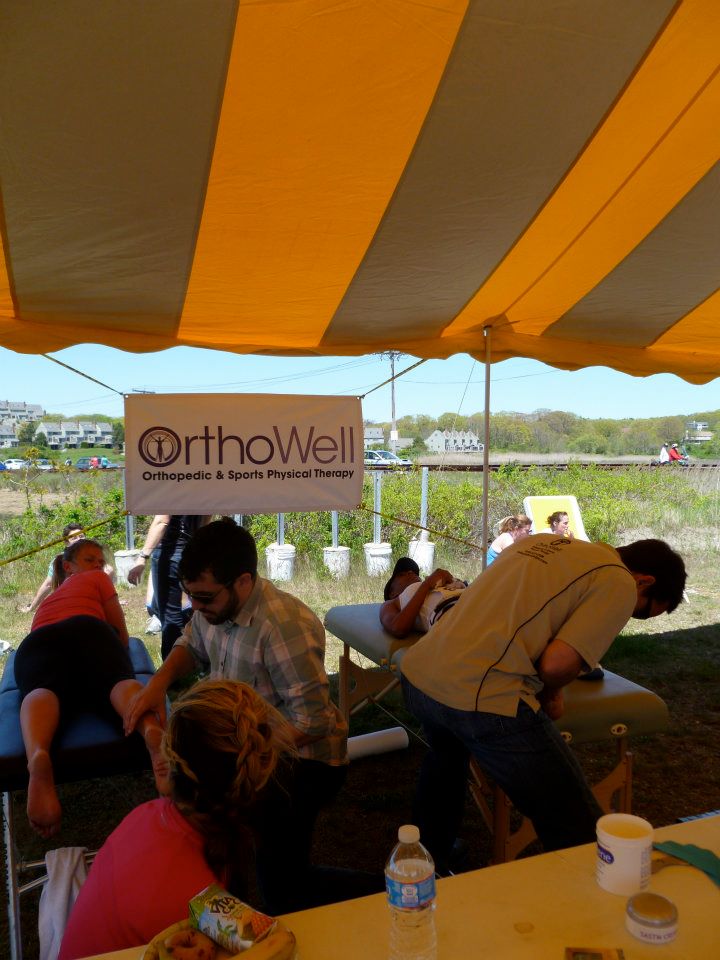
WOW!! We have been really busy here at OrthoWell. Thanks to you-our awesome patients!! I have been a little sidetracked from my blog posts recently as I am SURE all of you have noticed and have “sorely” missed. With the help of my incredible crew we attended (with our treatment tables and elbow grease) one 5K, one half marathon, and one health care exhibition during the month of May. In the meantime, I have been very focused on bringing new life and a new face to my website. How do you like the snazzy, new look of this newsletter? You can see on our homepage how easy we made it to quickly view our clinic’s specialties and the things that set us apart from other physical therapy clinics. You can see how much more personalized and descriptive we made the website by adding our OWN pictures. We all felt like movie stars during the photoshoot. I have never before seen Geoff smile so much!?! The OrthoWell miracles continue!! With this post, I would love to introduce, with eager anticipation, my NEW LOOK at www.orthowellpt.com Please take the time to LIKE US if you like what you see. I also included a few pictures: Megh’s first and victorious half marathon run and Geoff and I healing the wounded at the Gloucester Twin Lights Half Marathon.