Everyone knows exercise helps you live longer. The harder questions are how much, what kind, and how to tell if you’re on track. Several large studies offer useful answers, and a few are surprising.
Can You Rise From the Floor? The Sitting-Rising Test
Sit on the floor, cross your legs, then stand up without using your hands, knees, or arms. Brazilian researchers found this simple test predicts survival. The 2012 study followed 2,002 adults aged 51 to 80. Each extra point on the 10-point score was linked to 21% lower mortality, and the lowest scorers had five to six times the risk of death of the highest scorers.
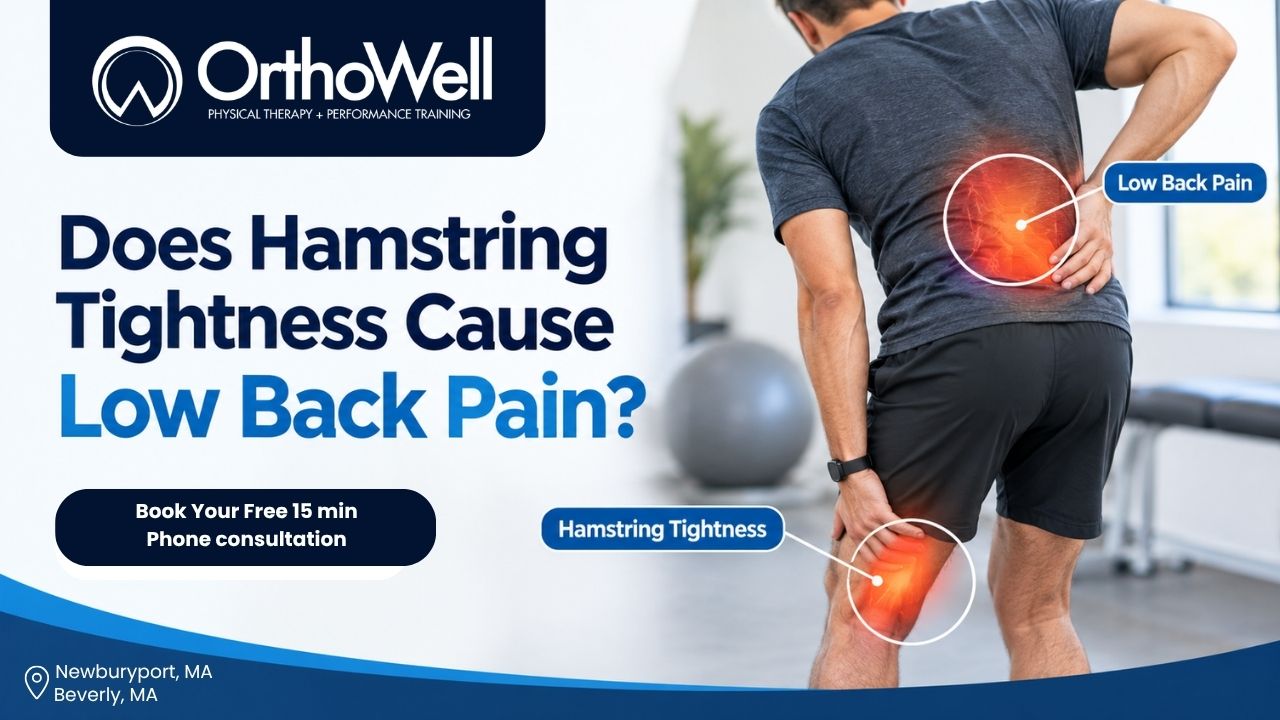
If you’ve been dealing with a nagging ache in your lower back and can’t touch your toes without wincing, you’re probably wondering if the two are connected. The short answer is yes, tight hamstrings can absolutely contribute to lower back pain, though the relationship works in both directions, and it’s rarely the whole story on its own.
This is a very interesting post from Ranchlands Wellness which you may, or should, connect with. The phrase “touch grass” has been around for the better part of a decade as internet slang for telling someone that they’d lost the plot, spending too many hours arguing with strangers online, and not enough time outside. This year, The Atlantic turned that idea into a podcast, taking the advice seriously instead of treating it as a joke, asking what it actually takes to rebuild an attention span in a culture built to fracture it.
Shockwave therapy has become a popular non-invasive treatment for people dealing with chronic pain, tendon injuries, and joint conditions. While many treatments focus on managing symptoms, shockwave therapy is designed to stimulate the body’s natural healing response. But what does the research actually say?
Several peer-reviewed studies have examined how focused extracorporeal shockwave therapy (ESWT) affects the body. The findings suggest that it may help reduce pain, improve movement, and support tissue repair in certain musculoskeletal conditions. Although results vary from person to person, the growing body of evidence makes shockwave therapy an option worth considering when recommended by a qualified healthcare professional.
If you’ve been dealing with brain fog, exhaustion, or that frustrating feeling of just not being “back to normal” since having COVID, you’ve probably searched online for anything that might help. Recently, a theory has been circulating suggesting that nicotine, particularly in patch form, might ease some long COVID symptoms.
It’s an interesting idea, and it’s worth understanding where it comes from. But it’s also important to separate early-stage research from a proven treatment. Here’s a breakdown of what’s actually known so far.
Collagen supplements are becoming increasingly popular for supporting healthy skin, joints, bones, and overall wellness. However, recent research shows that not all collagen peptides are equally effective. The latest focus in collagen science is on dipeptides and tripeptides, smaller collagen particles that are easier for the body to absorb and use.
A study published in the American Journal of Clinical Nutrition showed that eating two eggs daily lowered LDL cholesterol, while diets high in saturated fat raised it.
Researchers found that cholesterol from eggs did not raise LDL, but saturated fat from foods like bacon and sausage did, showing that food context makes a major difference.
Fall has arrived. Amazing colors once again. Should you stretch your hamstrings before hiking thru the fall colors? Read on to see if you should…or if you shouldn’t….
I want to share with you what my staff and I have learned to maximize your health and wellness and to keep you up-to-date on the happenings at OrthoWell. So read on and let’s keep you on track.
So what if I told you that there is actually very little research that substantiates any long lasting effects of stretching? What if I also told you that you may not even have to stretch your hamstrings to get a release of the stiffness? Would that make you stop stretching or does stretching actually make you FEEL good?
I have been practicing PT for 26 years and I can honestly say that my patients have had some pretty amazing results with the soft tissue work that we do in combination with stretching exercises. Just look at our Success Story page. If you are reading this right now, you may actually be one on them. There are some things that get our patients better that may not have a lot of research-substantiated evidence.
In a 2010 article by Wepppler and Magnusson, they point out that there is only a transient mechanical increase in length of tissue after stretching. In other words, the muscle stretch recoils after the stretch is removed. How long the stretch lasts depends on the magnitude and the duration of the stretch. So then, how hard should you stretch and why do we only hold our stretches for 30-60 seconds?
We have used the evidence gathered from the study of tissue deformation or biorheology to determine that the optimum amount of time to acquire the most dramatic “viscoelastic” elongation of tissue is between 30-60 seconds. Yes, there is a much more gradual elongation after that time but who has the time to wait…right? There was a study in 2004 by Guissard and Duchateau that showed partial maintenance of tissue elaongaton 30 days after the program when patents were performing 20 minutes of stretching 5 days per week. So yes, you reap what you sow when it comes to the time spent stretching.
The Sensory Theory of stretching means that we achieve an increase in length while stretching due to a “stretch analgesia” effect in which “it doesn’t hurt as much” so you FEEL as though you can stretch further into the range. So what is wrong with that? If you stand all day and your hamstrings are working overtime to keep you upright and stable, what happens to the tissue? It becomes “stiffer”. This may be due to scar tissue, waste products, and trigger points that form due to this constant state of contraction. Intuitively, it makes sense to perform massage and stretching to counteract these effects. However, is this the cure for the stiffness? Gary Cook, a world renowned PT, who has revolutionized the way that we that we think of functional training would say unequivocally NO!
Gary Cook claims that the “stiffness” we feel is reflexive. It is due to the stabilizing effect that our muscles need to perform on a daily basis in order to control faulty movement patterns and faulty postures. Some parts of our bodies are stabile and other parts are very mobile. For example, your lumbar spine tends to be mobile or “sloppy” as Gray Cook would say. Many people are unaware of how to engage their core or how to perform proper body mechanics to prevent stress to the lumbar spine. Our hamstrings can be the first line of defense when it comes to stabilizing the spine.
If you are unaware of how you stand, you could be placing your pelvis in an anteriorly rotated position. When your pelvis rotates forward, it places a “pinch’ or a stress on your lumbar spine. Your hamstrings will consequently contract in order to correct your alignment and “pull” your pelvis posteriorly. What happens when you squat or roll out of bed? If you are not engaging the proper core and hip muscles then your hamstrings continue to fire in order to stabilize your spine. There you have it. The viscous cycle for constant hamstring stiffness.
So how do you become more stabile? First of all, you need to become reacquainted with your core. Just doing planks may not be enough. You need to be evaluated to determine any faulty movement patterns. If you don’t correct the faulty patterns, then you are reinforcing bad habits and putting yourself at risk for injury. Gray Cook has developed Functional Movement Screens to determine exactly where your deficiencies are. In addition to this, we have put together a version of the Selective Functional Movement Screen in our clinic. Based on the results of our screen, there are many types of corrective exercises that can be instructed to get you back on track.
In conclusion, you need to realize that “stiffness” anywhere in your body could be multifaceted.- especially with your hamstrings. Does this mean that you should never stretch or massage your hamstrings? NO. Stretching can certainly make you FEEL better but you need to realize that stretching alone may not be the cure. In the words of Gray Cook
“If the body doesn’t stabilize correctly, it will figure out another way to get stability: it’s called stiffness.”
So what you THINK is causing your stiffness may NOT be the reason. We all need to think outside the box. You are guaranteed that when you come to see us at OrthoWell PT
I enjoy CrossFit because it consistently gives me a good workout. The workout ideology of CrossFit prides itself on never falling into a routine. This means every workout is something new that will not only work you out in a new way, but also help you to identify some new skill that you could improve upon. When working out with good form and responsible weight/volume, the benefits of Crossfit also translate to your functional daily activities. After a year of Crossfit I can truly say I have witnessed these benefits during my day to day activities.
As many of you have heard in the clinic I do a lot of mountain racing. This past weekend I had the luck to have a repeat win at one of the hardest races in the circuit. Check out my interview on levelrenner.com to get a little glimpse into the head of the Female winner Leslie and myself about how the race went down and up in this case.
Our wellness maintenance program is for those of you who want consistency of care after being discharged from physical therapy in order to prevent any reccurence of pain. We have three different plans the we offer that you can read about by clicking the link above.
“I would like to thank Chris, Katie and crew for the outstanding care I received after my Achilles surgery. Their knowledge, experience and attention to detail allowed me to expedite my recovery. Thank you.”
Dont forget to take advantage of our Try Before You Buy program.
We offer a FREE, no obligation injury screening for YOU, a FAMILY MEMER or a FRIEND. Just click the link below or send it to someone who may need our help.